
Facing an unexpected pregnancy can feel overwhelming, but you don’t have to let fear guide your decisions. An ultrasound can provide clear information about your options and help you make an informed decision.
This article explains why you need an ultrasound before an abortion. Keep reading to learn more.
Do You Have to Get an Ultrasound Before an Abortion?
It depends. Some states require women to receive ultrasounds before abortions, while others do not. Regardless of the laws in your state, we strongly recommend it.
An ultrasound provides clarity on two critical factors: pregnancy viability and gestational age. This information helps you understand your pregnancy options and make the best decision for your health.
What is Viability in Pregnancy?
In simplest terms, a viable pregnancy is one where the embryo/fetus has a heartbeat. During an ultrasound, technicians look for signs like a fetal heartbeat. This usually appears between 6.0-6.5 weeks from a woman’s last menstrual period.[1]
If a heartbeat cannot be detected, it may indicate that a miscarriage (spontaneous loss of a pregnancy) is occurring. Also, if there is no sign of a pregnancy inside the uterus, this could mean it is growing in another location (ectopic). Both conditions require alternative medical care. An ectopic pregnancy, in particular, is a life-threatening emergency requiring immediate attention.
Pregnancy Decision Line can connect you with a local pregnancy center that provides free ultrasounds, so you can confirm your pregnancy. Call us at 866-406-9327 to get started.
Call Now
*Important note: The purpose of these limited ultrasound exams is to identify a pregnancy inside the uterus, detect the fetal heartbeat, and estimate how far along you are. If there is no detectable heartbeat, it may indicate a miscarriage or ectopic pregnancy is occurring. If they cannot detect a fetal heartbeat during your appointment, they will provide appropriate referrals for follow-up care and treatment.
What is Gestational Age?
Gestational age refers to how far along you are in your pregnancy. Doctors measure it from the first day of your last period.
Knowing your gestational age is crucial because the abortion pill (mifepristone) is only FDA-approved for use up to 10 weeks gestation (or 70 days or less since the first day of your last menstrual period).[2]
Additionally, certain states have restrictions on how late women can receive abortions. Click the button to learn more about the abortion laws in your state.
Is Abortion Legal in My State?
Benefits of an Ultrasound Before Abortion
Receiving an ultrasound before abortion offers several benefits beyond meeting legal requirements. It allows you to:
- Know for certain if you are pregnant; pregnancy tests can be wrong
- Know if you have a viable pregnancy or one that is destined to end on its own
- Know if there is more than one baby or if you’re further along–you may not be eligible for the abortion pill
- Avoid the expense and potential heartache of abortion
What to Expect During an Ultrasound
An ultrasound is a safe and simple examination. It uses high-frequency sound waves to obtain images of your pregnancy.
During the ultrasound:
- The procedure will be explained and your consent obtained
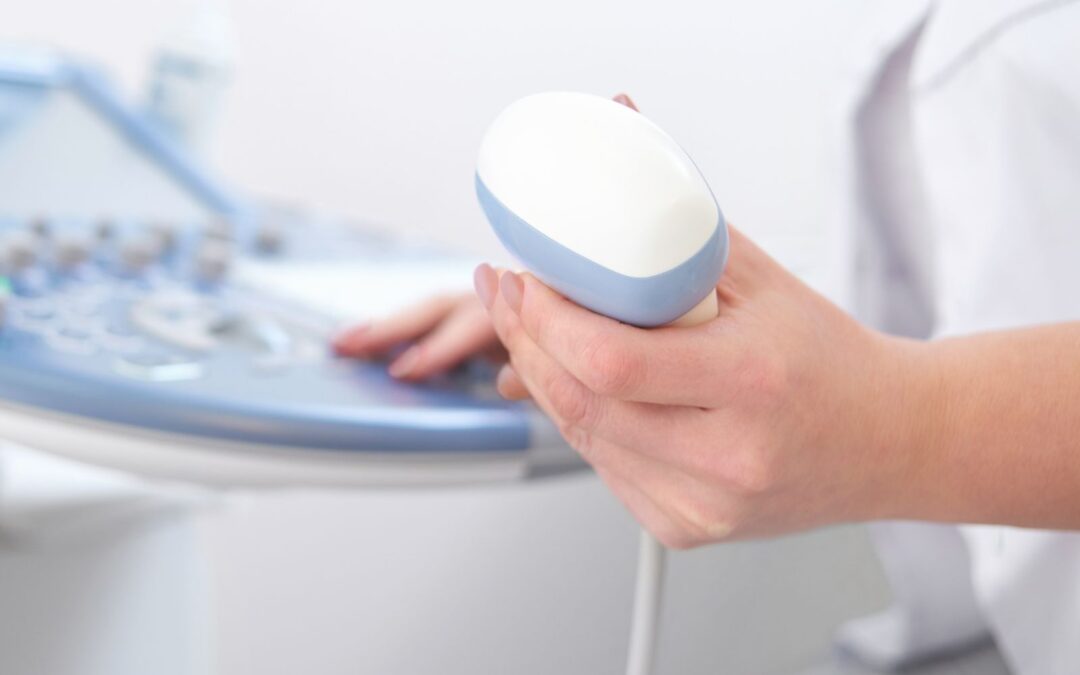
- A licensed/certified healthcare professional (HCP) will place gel on your abdomen and, using a handheld device called a transducer, will obtain images of the embryo/fetus.
- If you are early in your pregnancy, the healthcare professional may recommend a transvaginal ultrasound exam if the transabdominal exam wasn’t able to obtain clear images.
- You would then be asked to empty your bladder and change from the waist down. Once seated on the exam table, the HCP will gently place the transducer covered by a protective sheath into the vaginal canal. This provides an enhanced image of the embryo inside the uterus and increases dating accuracy.
- You can expect to learn about your pregnancy’s viability and gestational age, helping you make informed decisions.
Call Now to Schedule a Free Ultrasound Near You
You don’t have to take your next steps alone. Pregnancy Decision Line can connect you with a local pregnancy center that offers:
- Free Services: Pregnancy tests, ultrasounds, STD testing and treatment.
- Confidential Support: A safe space to ask questions and explore your options without pressure.
- Personalized Guidance: Information tailored to your situation, free from bias.
Ready to take the next step? Give us a call to get started.
Call 866-406-9327 and get help now.
REFERENCES
Sources
- Cleveland Clinic. (2023, March 3). Fetal Development. https://my.clevelandclinic.org/health/articles/7247-fetal-development-stages-of-growth
- Center for Drug Evaluation and Research. (2025, January 17). Mifeprex (Mifepristone). U.S. Food and Drug Administration. https://www.fda.gov/drugs/postmarket-drug-safety-information-patients-and-providers/mifeprex-mifepristone-information
- Dvash, S., Cuckle, H., Smorgick, N., Vaknin, Z., Padoa, A., & Maymon, R. (2021, January 29). Increase rate of ruptured tubal ectopic pregnancy during the covid-19 pandemic. European journal of obstetrics, gynecology, and reproductive biology. https://www.ncbi.nlm.nih.gov/pmc/articles/PMC7968738/
Please be aware that Pregnancy Decision Line does not provide or refer for abortion services.