
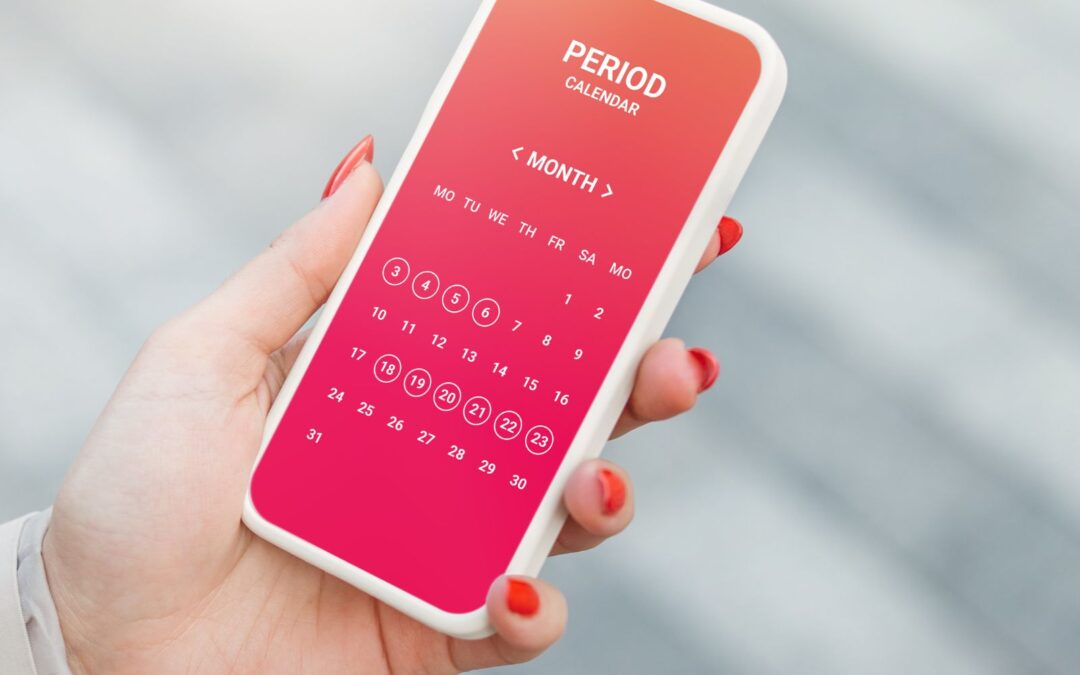
Any time you have unprotected sex, there’s a possibility you could get pregnant, including on your period. Although it’s very rare, it can happen.
If it does happen, it’s important to know your next steps. Keep reading to find out more.
How Can You Get Pregnant While On Your Period?
A typical menstrual cycle lasts about 28 days from the start of your period until the start of your next period. Your period begins the cycle, and ovulation (when the ovary releases an egg for fertilization) usually occurs in the middle, around day 14. So, a week or two after your period ends, you ovulate. Around that time, you are more likely to get pregnant.1
However, most women have variability in their monthly cycles. This means that every woman ovulates at a slightly different time, with some women possibly ovulating closer to their periods.
Plus, after the egg is released, it remains in the body for up to 24 hours. But after sex, sperm can last in a woman’s body for up to five days.2 So, having sex around the time of your period could still lead to a pregnancy.
Three factors increase the likelihood of getting pregnant during your period:
- Shorter Menstrual Cycles. You could ovulate a day or two after your period ends.
- Extended Period (Duration of Bleeding). You could ovulate shortly after the end of your bleeding.
- Mid-cycle Spotting (Light Bleeding). Your spotting mid-cycle could be a sign of ovulation rather than a period.
Even if you have regular cycles, it may be hard to know exactly when you ovulate. Even without these factors, it’s possible to still become pregnant during your period.
If you think you might be unexpectedly pregnant, call Pregnancy Decision Line. We can connect you with a local pregnancy center that provides free pregnancy tests and ultrasounds, so you can get answers.
Call 866-347-7208 and get help now.
Can You Get Pregnant Right After Your Period?
Yes, it’s possible to get pregnant right after your period, especially if you have a short menstrual cycle or an extended period.
Can You Get Pregnant Right Before Your Period?
It’s unlikely to get pregnant right before your period because the lining of your uterus is not ready for a fertilized egg. But since sperm can last in the reproductive tract for up to five days, sex right before your period could still lead to pregnancy.
What Does a Shorter Period Mean?
Women can bleed between three to seven days when on their periods. Factors such as stress, medications, illness, hormonal changes, or lifestyle changes can impact your period.3 If you’ve missed a period, you should first rule out pregnancy by taking a pregnancy test. If the test is positive, your next step is to receive an ultrasound.
When Do Pregnancy Symptoms Begin?
Women typically develop pregnancy symptoms two weeks after conception. Symptoms include a missed period, tender breasts, tiredness, and nausea.
How Soon Can I Take a Pregnancy Test?
You can take a pregnancy test as soon as you’ve missed your period. Positive home pregnancy test results occur about eleven days after conception (when the sperm fertilizes the egg).
My Pregnancy Test is Positive. I’m Considering Abortion. What Should I Do?
Just because your pregnancy test is positive, it doesn’t mean that your pregnancy is viable.
Before considering abortion, it’s crucial to receive an ultrasound to determine how far along you are and whether there is a fetal heartbeat present.
Pregnancy Decision Line can connect you with a local pregnancy center that provides free pregnancy testing, ultrasounds, and a safe place to ask questions and explore your pregnancy options. Give us a call to get started.
Call 866-347-7208 and get help now.
*Important notes: Please be aware that Pregnancy Decicion Line does not provide or refer for abortion services.
Additionally, this article is not meant to substitute for medical advice or treatment. The purpose of a limited ultrasound exam is to identify a pregnancy inside the uterus, detect the fetal heartbeat, and estimate how far along you are. If there is no detectable heartbeat, it may indicate a miscarriage or ectopic pregnancy is occurring. If a fetal heartbeat cannot be detected during your appointment, the staff will provide appropriate referrals for follow-up care and treatment.
REFERENCES
Sources
-
-
- Wilcox, A. J., Weinberg, C. R., & Baird, D. D. (1995). Timing of Sexual Intercourse in Relation to Ovulation—Effects on the Probability of Conception, Survival of the Pregnancy, and Sex of the Baby. New England Journal of Medicine, 333(23), 1517–1521. https://doi.org/10.1056/NEJM199512073332301
- LaQuita Martinez. (2024, March 31). Pregnancy – identifying fertile days. Medline Plus. https://medlineplus.gov/ency/article/007015.htm
- Cleveland Clinic. (2023). Irregular Periods. https://my.clevelandclinic.org/health/diseases/14633-abnormal-menstruation-periods#overview
-