
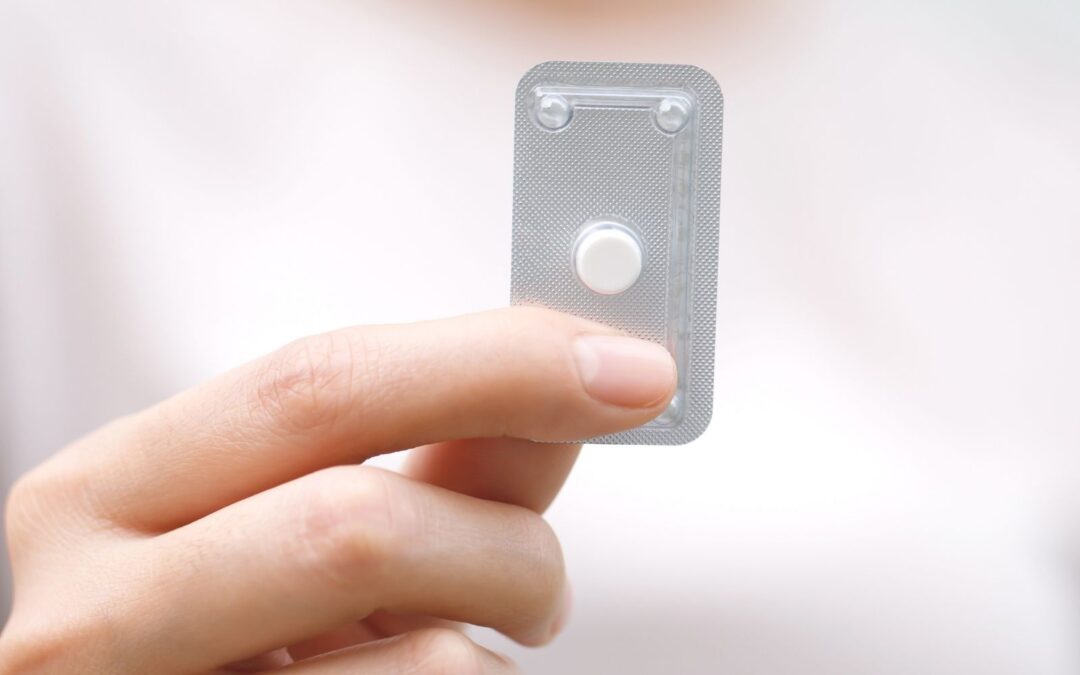
If you recently took Plan B and you’re wondering whether you could still be pregnant, you’re not alone. Plan B is not a guarantee against pregnancy, and understanding how it works can help you figure out your next steps with more confidence.
At Pregnancy Decision Line, we talk with women every day who have questions about emergency contraception, pregnancy symptoms, and what their options are if they think they might be pregnant. This article will explain how Plan B works, how effective it actually is, and what to do if you think you might be pregnant after taking it.
What Is Plan B?
Plan B, sometimes called the “morning-after pill,” is a form of emergency contraception. It lowers the risk of pregnancy by preventing or delaying ovulation.
Plan B is designed to be taken after unprotected sex or a birth control failure (like a broken condom). It contains a hormone called levonorgestrel, which is also found in some regular birth control pills, but in a much higher dose.1
Is Plan B Birth Control?
No. While Plan B is a form of emergency contraception, it is not the same as birth control. It should not be used as the primary way to prevent pregnancy.2
Can You Get Pregnant After Taking Plan B?
Yes. This is one of the most important things to understand about emergency contraception: you can still get pregnant after taking Plan B. While it lowers your chances of pregnancy, it does not eliminate the risk entirely.
Several factors affect how well Plan B works, including:
- Timing. Plan B is most effective when taken as soon as possible after unprotected sex, ideally within 24 hours. Its effectiveness decreases the longer you wait, and it becomes far less reliable after 72 hours (three days).2
- Where you are in your cycle. If you’ve already ovulated before taking Plan B, it may not work at all, since it can’t stop an egg that’s already been released.
Is Plan B 100 Percent Effective?
No method of emergency contraception is 100% effective, and Plan B is no exception. Even if it is taken as recommended, there is still a real chance of pregnancy after Plan B.
Studies suggest that when taken correctly and promptly, Plan B can reduce the risk of pregnancy by up to 94%. If taken within 72 hours, effectiveness drops to 58%.3
Can Plan B End an Early Pregnancy?
In rare cases, yes.
Although the goal of Plan B is to prevent or delay ovulation4, 5, 6, it is not always successful. If an embryo has already formed when Plan B is taken, it may interfere with uterine attachment, potentially causing the end of an early pregnancy.7
If that is not your intent, then Plan B may not be for you.
Signs You Might Be Pregnant After Taking Plan B
Every woman’s body is different, but some common early pregnancy symptoms include:
- A missed or unusually light period
- Nausea or morning sickness
- Breast tenderness or swelling
- Fatigue that feels different from normal tiredness
- Frequent urination
- Mood changes
Keep in mind that Plan B itself can cause temporary side effects that mimic early pregnancy symptoms, such as nausea, breast tenderness, and changes to your period. This overlap can make it hard to know what’s actually happening in your body. The only reliable way to know for sure is to take a pregnancy test and receive an ultrasound.
What to Do If You Think You Might Be Pregnant
If you’ve taken Plan B and you’re now wondering whether you could be pregnant, please know that you don’t have to figure this out alone. Here are the steps we recommend:
Step 1: Take a Pregnancy Test
If your period is late or you’re experiencing symptoms, the first step is to take a pregnancy test.
Pregnancy Decision Line can connect you with a local pregnancy center that provides free medical-grade pregnancy tests in a private, judgment-free environment. Their tests are administered by medical professionals, which helps reduce the chance of inaccurate results.
Step 2: Get an Ultrasound If Your Pregnancy Test Is Positive
If your pregnancy test comes back positive, the next step is to receive an ultrasound. An ultrasound helps confirm how far along you are, whether the pregnancy is developing in the uterus (as opposed to a rare but serious ectopic pregnancy), and whether the pregnancy is viable.
Our pregnancy center partners also provide free ultrasounds. This will give you accurate, medically sound information before you make any decisions.
Step 3: Explore Your Pregnancy Options
Finding out you’re pregnant after taking Plan B can bring up a lot of emotions all at once — fear, confusion, relief, or even grief.
Pregnancy Decision Line and our pregnancy center partners are here to listen without judgment and help you understand all of your options, including abortion, adoption, and parenting.
We won’t pressure you toward any particular choice. Our goal is simply to make sure you have accurate, honest information so you can make a decision that’s right for you and your future.
Step 4: Ask Questions
No question is too small or too awkward. Whether you want to understand your test results, learn more about early pregnancy, or talk through what each option would actually look like for your life, our pregnancy center partners are ready to answer your questions with patience and care.
Think You’re Pregnant After Taking Plan B? Pregnancy Decision Line Can Help.
Finding out you might still be pregnant after taking Plan B doesn’t mean you’re out of options. Pregnancy Decision Line can connect you with a local pregnancy center that provides free pregnancy tests, ultrasounds, pregnancy options education, and a safe place to ask questions.
Ready to take the next step? Give us a call to get started.
Call 866-406-9327 and get help now.
Important Note: Please be aware that Pregnancy Decision Line does not provide or refer for birth control, Plan B, or abortion services.
Frequently Asked Questions
Can you still get pregnant after taking Plan B?
Yes. Plan B reduces the risk of pregnancy but does not eliminate it completely. Its effectiveness depends on timing, your cycle, and other individual factors.
How soon after taking Plan B should I take a pregnancy test?
Most experts recommend waiting until a week after your expected period. If your period doesn’t arrive on time, or if you experience early pregnancy symptoms, it’s a good idea to take a test.
Is Plan B birth control?
No. Plan B is emergency contraception meant for occasional use after unprotected sex, not a replacement for regular, ongoing birth control methods.
Is Plan B 100 percent effective?
No. Plan B lowers the risk of pregnancy but is not guaranteed to prevent it, especially if taken late or after ovulation has already occurred.
What if my pregnancy test is positive after taking Plan B?
Contact Pregnancy Decision Line to schedule a free ultrasound at a local pregnancy center. This will confirm how far along you are and get accurate information about your pregnancy before deciding on next steps.
REFERENCES
Sources
- FDA. (2022, December 23). Plan B One-Step (1.5 mg levonorgestrel) Information. U.S. Food and Drug Administration. https://www.fda.gov/drugs/postmarket-drug-safety-information-patients-and-providers/plan-b-one-step-15-mg-levonorgestrel-information
- Mayo Clinic. (2024, September 1). Levonorgestrel (Oral Route) Side Effects. https://www.mayoclinic.org/drugs-supplements/levonorgestrel-oral-route/side-effects/drg-20074413
- Cleveland Clinic. (2024, November 21). Morning-After Pill. https://my.clevelandclinic.org/health/treatments/23386-morning-after-pill
- Hapangama D, Glasier AF, Baird DT. “The effects of peri-ovulatory administration of levonorgestrel on the menstrual cycle.” Contraception. 2001 Mar;63(3):123-9. DOI:10.1016/s0010-7824(01)00186-x https://www.contraceptionjournal.org/article/S0010-7824(01)00186-X/fulltext
- Croxatto, HB, Brache V, Pavez M, Cochon L, Forcelledo ML, Alverez F, Massai R, Faundes A, and Salvatierra AM, 2004. “Pituitary-ovarian Function Following a Standard Levonorgestrel in Emergency Contraception Dose or a Single 0.75 mg Dose Given on the Days Preceding Ovulation.” Contraception. 2004 Dec;70(6):442-50. DOI:10.1016/j.contraception.2004.05.007 https://www.contraceptionjournal.org/article/S0010-7824(04)00156-8/fulltext
- AAPLOG Committee Opinion #7. (2020, January). Embryocidal Potential of Modern Contraceptives. https://aaplog.org/wp-content/uploads/2024/05/Committee-Opinion-7-updated.pdf
- Kahlenborn, C., Peck, R., & Severs, W. B. (2015). Mechanism of action of Levonorgestrel emergency contraception. The Linacre Quarterly, 82(1), 18-33. https://doi.org/10.1179/2050854914y.0000000026